Wunder

Cross Media Design & Branding
Project Overview
Wunder Art Gallery aimed to develop a cross-media campaign that draws people out of their routines and connects online audiences to meaningful in-person art experiences.
My Role
Brand and UX Designer
Programs Used
FigJam, Figma, Adobe Illustrator, and Adobe InDesign
Results
Brand Identity, Social Media Post, Exhibit Landing Page, and Tri-Fold Brochure
Core Problem
People lack wonder and beauty in their daily lives because they don't feel art is accessible or meant for them.
Wunder Art Gallery takes its name from "Wunderkammer"—a term from the Enlightenment period describing travelers' cabinets of curiosities and wonders. This historical concept of curated discovery became the foundation for a modern gallery brand designed to make art feel accessible and wonder-inducing.

‍Many people struggle with monotony in their daily lives, often because they don't give themselves permission to seek out wonder and beauty. Wunder needed to position itself as an inclusive space where anyone could escape the everyday and rediscover curiosity through art.
Problem
Creating a brand and launching an exhibit centered around escaping from everday boredom thorugh art.
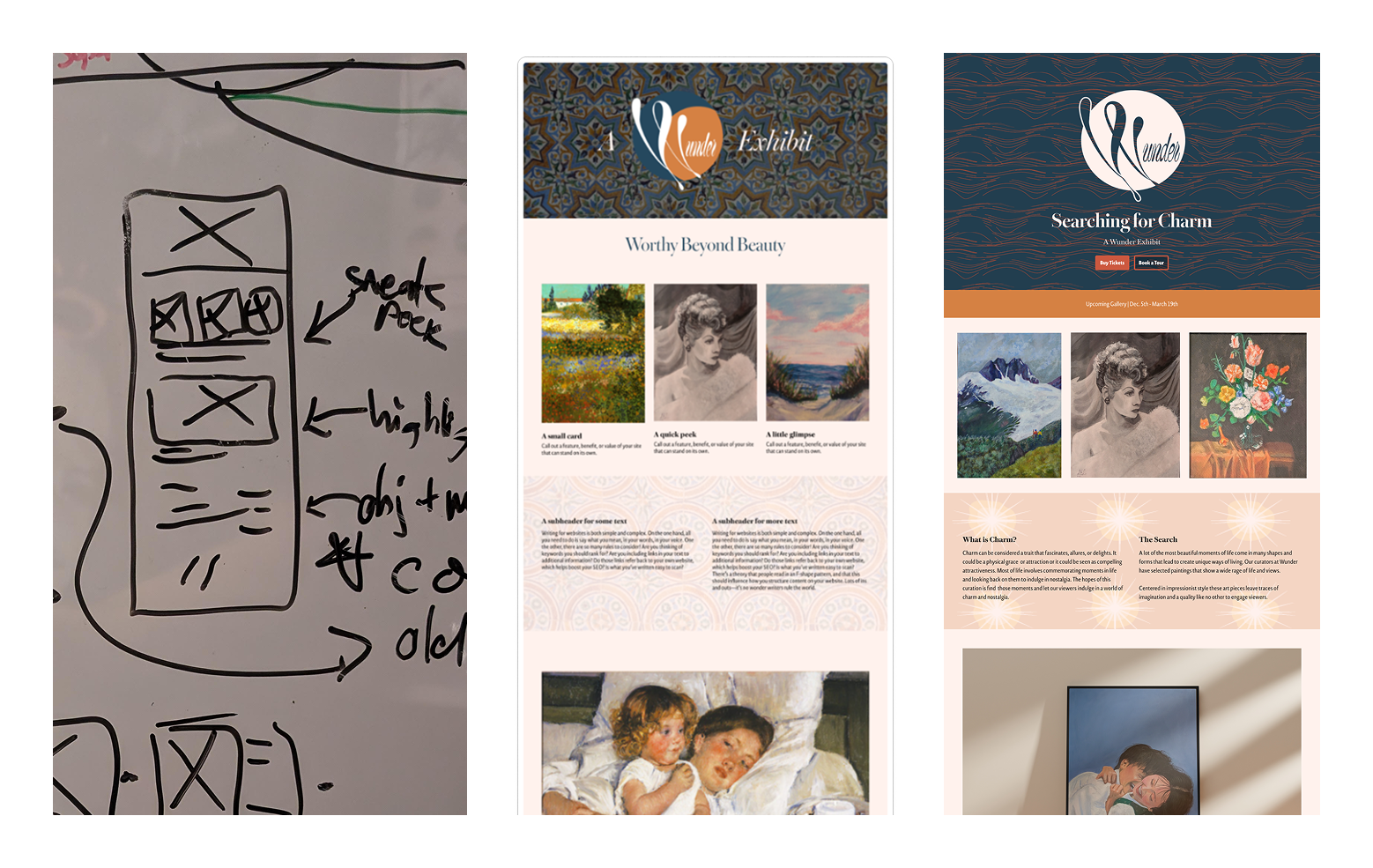
During the brainstorm phase I began by researching how museums and galleries have evolved historically, which informed the brand's conceptual direction. From there, I moved through wireframing, feedback sessions, and iterative refinement to develop a cohesive cross-media campaign.

Key activities included:
Historical research
Brand identity development
User journey mapping across digital and physical touchpoints
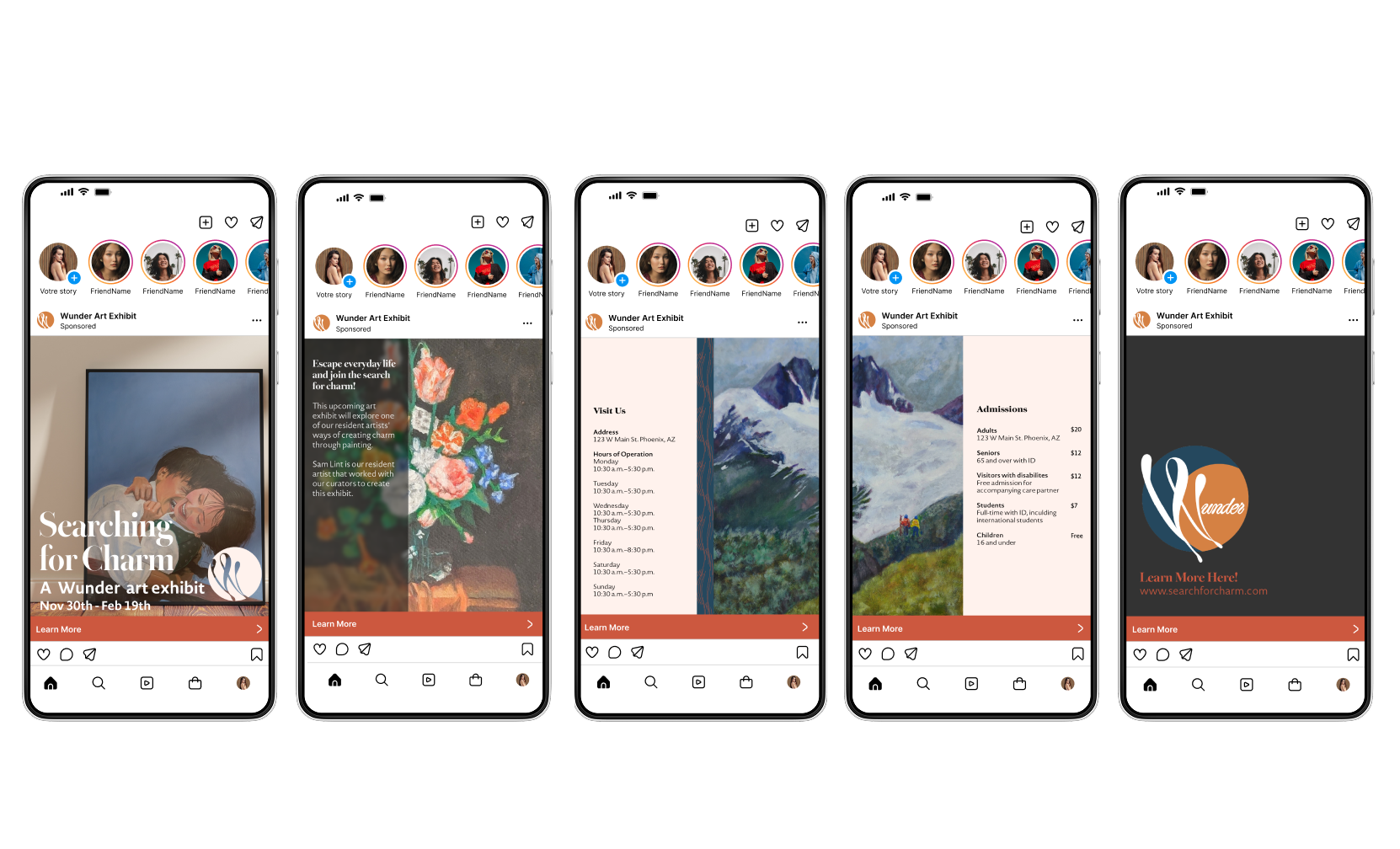
Social media and website design
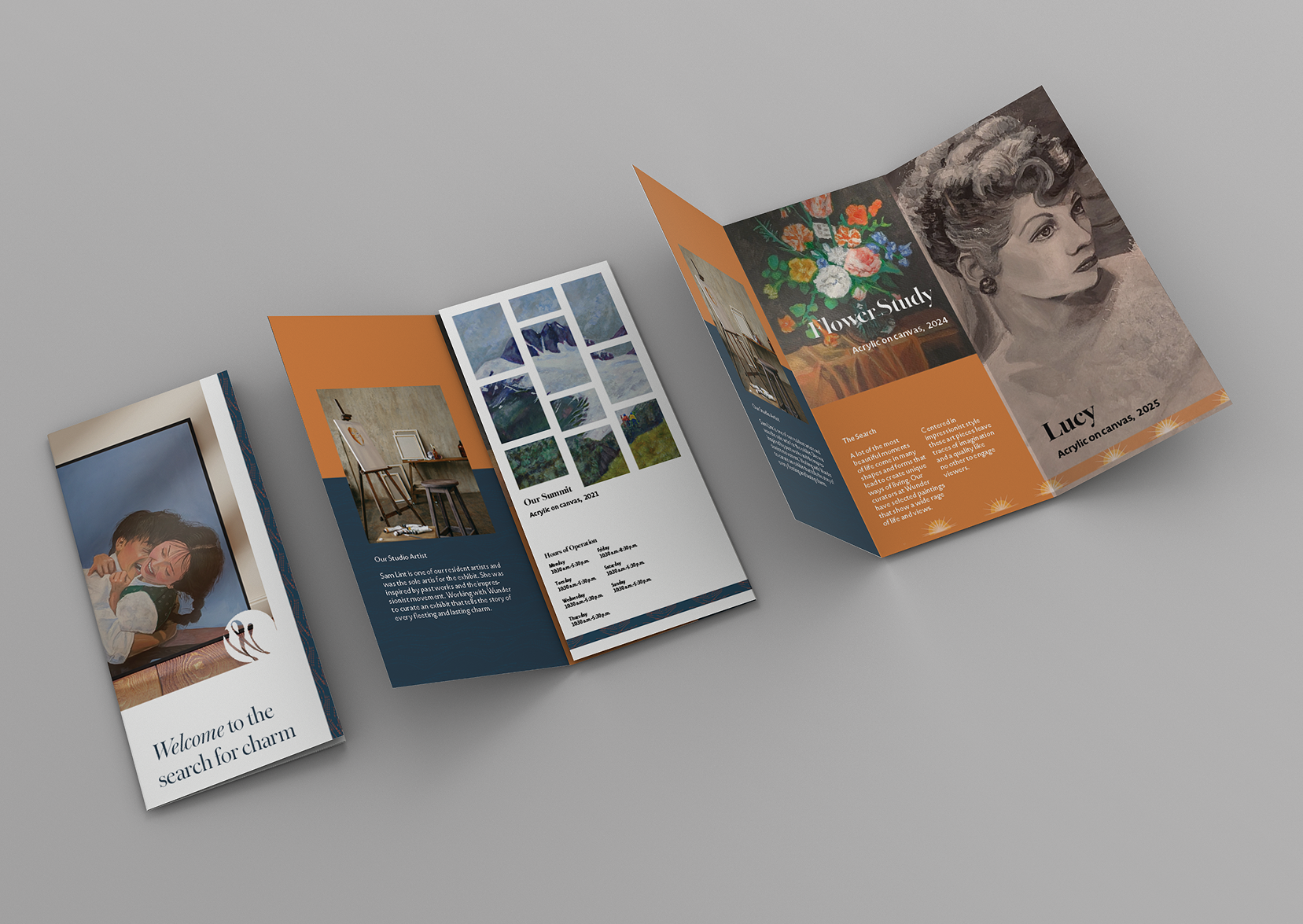
Print collateral creation for in-person experiences
Process
Starting with the current user data to create a brand that makes sense.

After researching and branding, the strategy was to meet people where they are (social media), provide deeper information online, and create a memorable physical experience at the gallery.

I delivered a complete brand identity and cross-platform campaign for an upcoming exhibit. The user journey begins with social media content designed to capture attention and build intrigue, guides users to a website with detailed exhibit information, and concludes with print materials that enhance the in-person gallery experience.I delivered a clickable prototype demonstrating core user flows: account creation and sign-in, ticket purchasing, event browsing with filtering capabilities, and detailed event pages. The prototype successfully validated the design approach and provided Mood with a clear roadmap for development.

Through this project, I discovered how critical it is to design each touchpoint with a specific purpose rather than treating them as interchangeable brand extensions. Social media needed to spark curiosity with just enough information to intrigue. The website served as the research phase where users could dive deeper and commit to attending. Print collateral became crucial for creating that tangible "cabinet of wonders" feeling once visitors arrived. This taught me to think more strategically about where users are mentally at each stage and what they actually need at that moment.

Next steps: The current campaign focuses on launching a single exhibit. The natural evolution would be to develop a flexible brand system that could adapt to multiple gallery programs throughout the year: rotating exhibitions, artist talks, workshops, and community events. I'd also want to gather visitor feedback after the first exhibit launch to understand which touchpoints resonated most, then refine the approach for subsequent programming.
Results and Lessons
This prototype was a learning experience in meeting user where they are at.